


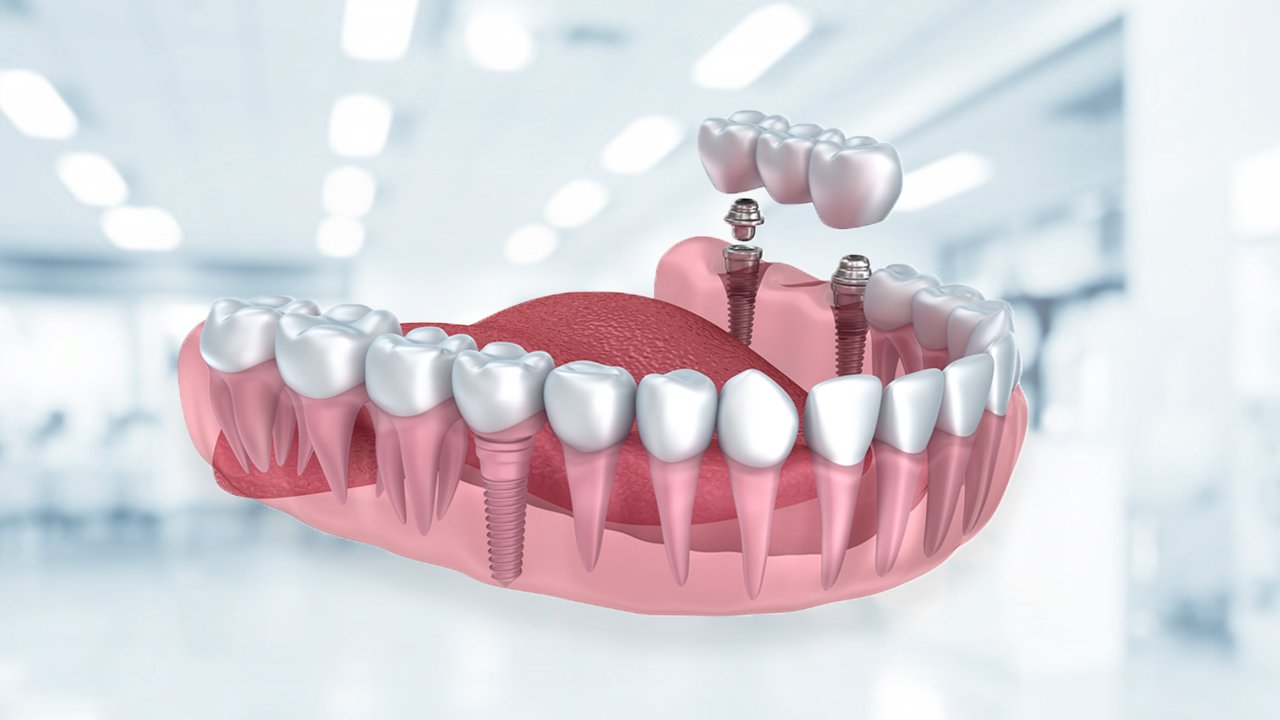
What is a dental implant?
Dental implants are screw- or root-shaped structures made of titanium that are placed into the jawbone. The aim is for the bone to heal around the implant and accept it as a part of the bone. Titanium is preferred because it does not interact with body tissues and is a material resistant to forces. Implants are placed in spaces created by previously lost teeth or, if there is no serious infection, in the tooth socket after tooth extraction. Implant placement is the best and most modern treatment method known for treating missing teeth.
Is an implant needed for every tooth lost?
Generally, dentists prefer to use implants to replace each lost tooth. In some cases, two implants can be placed spaced apart, and a bridge prosthesis can be made on top of them. The number and method of implant placement are determined after the dentist’s clinical and radiographic examination.
In what situations is dental implant treatment needed?
Individuals with missing teeth cannot perform functions such as chewing, and this also results in an aesthetically unpleasing appearance. Missing teeth alter the bite and can cause significant problems in the temporomandibular joint. From a psychological perspective, it can lead to a lack of self-confidence. Dental implants, an ideal treatment method, can replace teeth lost due to trauma, decay, or periodontal disease. Problems such as tooth resorption can occur over time in missing teeth. Dental implants, unlike bridges which rely on support from neighboring teeth, offer a more conservative solution.
Which department performs dental implant procedures?
Dental implant procedures are performed by oral and maxillofacial surgeons, a branch of dentistry.
How is implant treatment applied?
Since implant placement is a surgical procedure, the quality of the materials used and the sterilization and hygiene of the environment are the most important criteria. One week is usually sufficient for implant treatment. Alternatively, thanks to self-dissolving sutures, treatment can be completed in a single day, but in this case, a temporary prosthesis will not be possible.
The first stage of your treatment is implant placement. In the second stage, the implant is expected to fuse with your bone over a period of 3-6 months, after which the porcelain crowns that will go on top of the implant are made within a week. The placement of a single implant takes approximately 10-15 minutes.
The entire implant procedure, from start to finish, takes only 3-4 minutes. The patient experiences absolutely no pain during this time due to the anesthesia. The numbness wears off within 2-3 hours, but pain medication may be needed for 1-2 days.
