


What is CAD-CAM?
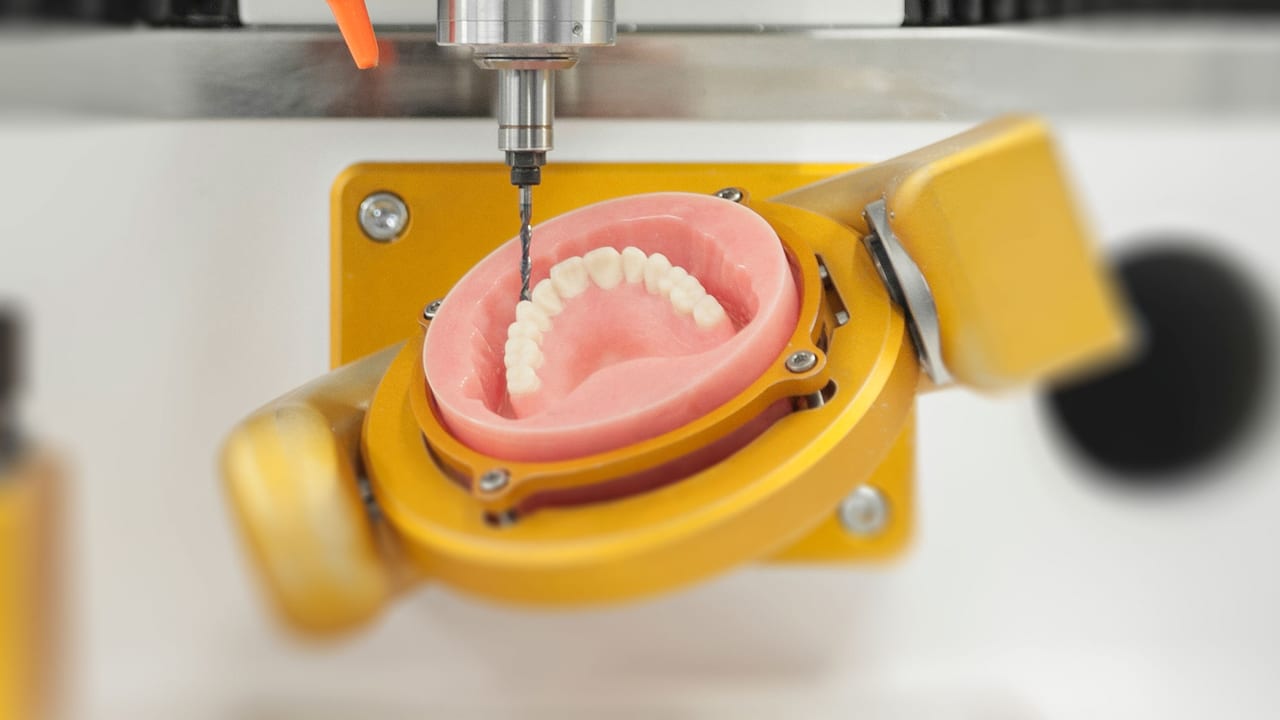
CAD-CAM is a method used for computer-aided dental design and manufacturing. CAD stands for Computer Aided Design, and CAM stands for Computer Aided Manufacturing. The combination of computer-aided design and manufacturing involves scanning a 3D image of the mouth using small, specialized cameras. Following this scan, the design of the prosthesis is created on a computer, and then the blocks are processed using specialized milling devices. In short, it encompasses all processes from scanning the mouth to manufacturing the prosthesis, all done with computer support.
How is the CAD-CAM procedure performed?
The first stage of the treatment requires preparing the tooth to be restored in the mouth. Then, the images scanned from the patient’s mouth with an optical camera are recorded directly to the device, and the design of the most suitable prosthetics for the patient is prepared using specialized software on the computer. Subsequently, the restoration is manufactured with a specialized milling machine and placed in the patient’s mouth. CAD-CAM dentistry, which enables taking an exact three-dimensional impression of the tooth, provides the advantage of designing by taking images with a specialized camera instead of placing soft material over the tooth to take a mold. This method, which ensures a full-scale impression of the tooth, produces a structure suitable for the tooth within a few minutes, allowing the desired prosthetics to be applied to patients without any problems.
What are the advantages of CAD-CAM treatment?
High levels of aesthetics are achieved with restorations prepared using this technology. They are prepared quickly, have a wide range of applications, and are a reliable method. Unlike traditional methods, this technique involves taking measurements of the teeth prepared by the dentist using a tiny camera connected to a computer. The restoration is then prepared using these ethylene scan images. With the crane device on the system, the restoration is prepared for bonding by the computer, resulting in much more harmonious and realistic-looking restorations. With CAD-CAM, the preparation and application of a porcelain restoration to the patient can be completed within 1-2 hours. Other advantages can be listed as follows:
The system operates with micron-level precision, achieving a level of accuracy that is impossible to reach with traditional methods.
It saves time as the restorations are prepared in a very short period.
The production quality is high because every detail can be observed and controlled during the design phase.
A flawless aesthetic appearance is achieved thanks to the CAD-CAM system.
There is no need for traditional impressions during the design process.
It provides a significant advantage for patients with limited mouth opening or a sensitive gag reflex.
By providing fast solutions with CAD-CAM dental prosthetic applications that ensure perfect tooth restoration, the patient’s quality of life is increased.
Who is recommended for CAD-CAM treatment?
This method is ideal for individuals who experience gag reflexes during measurements and for busy people who don’t want to waste time during trial fittings, allowing them to achieve their desired restorations in a single day.
Which department deals with CAD-CAM processing?
Patients who are interested in or want to obtain information about CAD-CAM treatment can consult with prosthetic dentistry specialists, a branch of dentistry.
