


What is tooth extraction?
Thanks to advancements in science and technology in dentistry, the priority is now on treating and preserving the tooth in its natural state in the mouth. Tooth extraction is the process of removing a tooth from its socket in the bone. Tooth extraction is usually resorted to in cases where treatment is not possible.
What is a wisdom tooth?
Wisdom teeth, also known as 20th teeth, are the third molars that are usually expected to erupt between the ages of 17 and 26.
Do wisdom teeth (20th teeth) absolutely need to be extracted?
If your wisdom teeth are healthy and in the correct position, they do not require extraction; however, they may be extracted if necessary to create space for orthodontic treatment.
What is impacted tooth extraction?
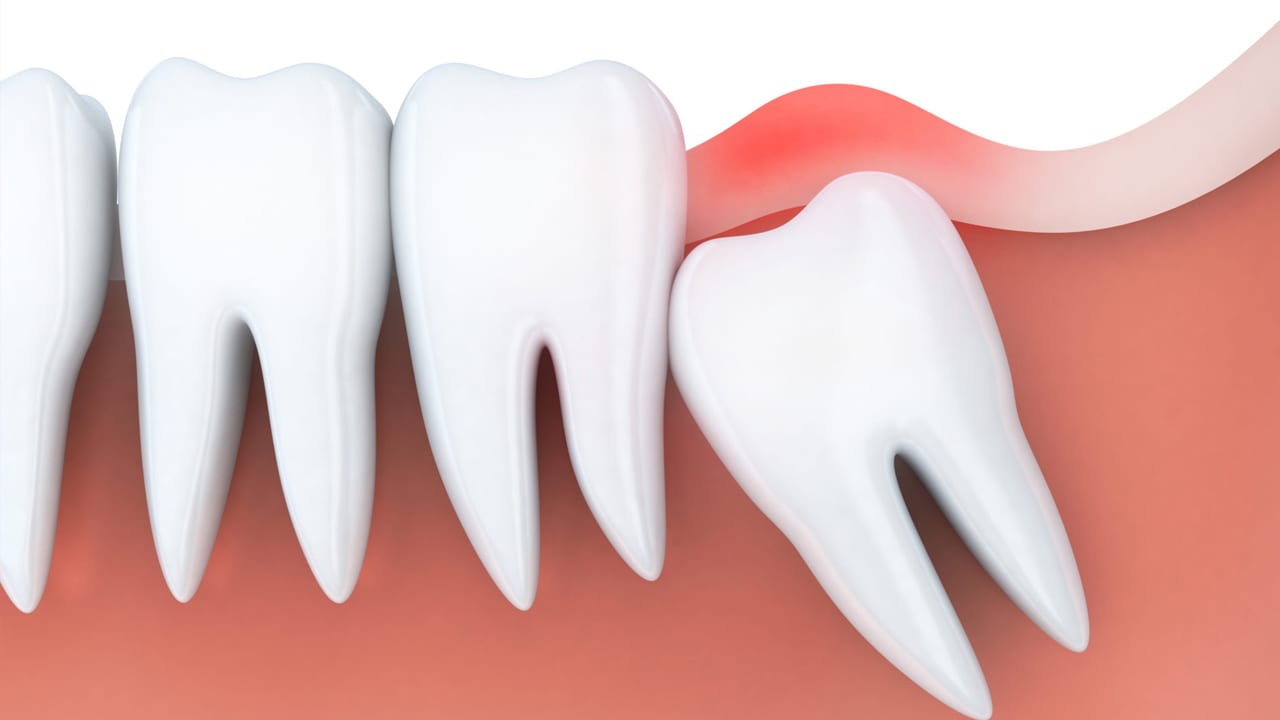
Impacted tooth extraction is usually performed because wisdom teeth (20th teeth) cause problems. Early humans had different dietary needs, requiring back teeth as well, but over time, as foods became easier to eat and softer, jaws shrank, and the back wisdom teeth became unnecessary. As jaws shrink, wisdom teeth struggle to find space and don’t erupt like other teeth. Unable to find space, these wisdom teeth push against the teeth in front, causing crowding. Their position so far back prevents the surrounding gum tissue from developing in its normal anatomical structure, making them more susceptible to inflammation.
What is the difference between extracting an impacted tooth and simply extracting a tooth?
Impacted tooth extraction is generally the surgical removal of a wisdom tooth (20th tooth) through an incision under the skin, while tooth extraction is the removal of teeth that are visibly damaged and beyond treatment.
Which department performs tooth extractions?
Tooth extraction and impacted tooth extraction procedures are performed by oral and maxillofacial surgeons, a branch of dentistry.
Why is tooth extraction necessary?
Teeth with advanced decay or extensive material loss that cannot be saved.
Traumatized or fractured teeth.
Teeth that were intended to be saved with root canal treatment but failed.
Teeth that are loose due to periodontal diseases.
Milk teeth that have not fallen out when they should have.
Impacted or semi-impacted teeth that have not fully erupted.
Teeth that cause the formation of cysts or tumors.
Teeth that cause problems due to extreme displacement.
Teeth that are healthy but may need to be extracted to create space in the jaw for orthodontic treatment.
Is tooth extraction a painful procedure?
Tooth extraction is performed under anesthesia, and you will not feel pain during the procedure, but you may experience some minor pain afterward. This pain can be controlled with painkillers.
Will swelling occur after the procedure?
The degree of swelling varies depending on the position of the tooth and from person to person. To prevent swelling, a cold compress should be applied to the cheek area for the first 24 hours. Mild swelling in the area is normal and necessary for healing.
How is a tooth extraction performed?
Although many of us fear tooth extraction, it is actually a very simple procedure performed under local anesthesia. First, the dentist examines the patient’s general health and dental health. They examine the shape, length, position, and soft tissue condition of the tooth and surrounding bone using X-rays, and complete the definitive diagnosis accordingly. With a simple surgical procedure, after the area is numbed with local anesthesia, the tooth is loosened with the help of an elevator and extracted with dental forceps. Depending on the case, bone reshaping may be necessary.
