

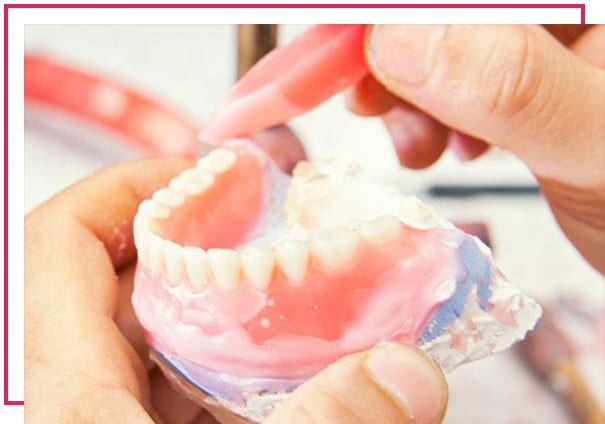
What is prosthetic dental treatment?
It is a Department that has undertaken a heavy mission, encompassing numerous disciplines such as removable and fixed prosthetics, implantology, and maxillofacial prosthetics. The science and art of filling in and replacing the lost parts of teeth or one or more missing teeth and the associated missing tissues with suitable materials, with the aim of restoring function, aesthetics, comfort, and health. Occlusion (closure) principles are among the most crucial aspects we must pay attention to, regardless of the type of prosthesis being fabricated.
What are the types of prostheses?
Removable Prostheses
Removable prostheses are used in cases where the supporting teeth cannot bear the expected load, in situations involving extensive tooth loss or uninterrupted missing tooth areas, or when there are no teeth in the mouth at all. They are defined as an artificial device that can be inserted and removed by the patient and replaces missing teeth.
Removable Partial Denture
For tooth support, the ends called crochets engage with the part of the tooth located under the convex area near the gum, providing retention.
Total (full) denture
If there are no teeth left in the mouth to serve as abutments, force transmission, support, and retention are achieved by seating the prosthesis on the tissue surface.
Fixed Prostheses
These are types of prostheses that are created by adhering structures prepared on models obtained from impressions taken after tooth preparation, in a way that ensures their fit within the mouth and allows them to remain fixed on the tooth.
Crown
It is preferred for single tooth-related material losses and aesthetic problems.
Maryland Bridges (Adhesive Bridges)
Maryland Bridges can also be a treatment option for single anterior tooth deficiencies.
Bridge
In cases of multiple tooth loss, the structures that replace the gaps by using the teeth closest to the missing area as supports and remain permanently in the mouth are called bridges.
Laminate Crowns
This is a prosthetic treatment method that is performed only on the anterior surface of the tooth, within the enamel boundaries, with minimal preparation.
Telescope Crowns
When teeth are excessively curved, crooked, or elongated in a way that would cause incompatibility with the area where a dental prosthesis will be placed, instead of removing these teeth, their length can be shortened and telescopic crowns, which are interlocking crowns, can be applied to them.
Inley – Onley Fillers
Onlay-Inlay is the most suitable treatment method when there is extensive tooth structure loss but the remaining tooth tissue is sufficiently robust to avoid the need for a full crown.
Implant Prostheses
It is the application of fixed or removable prostheses placed on implants or supported by implants.
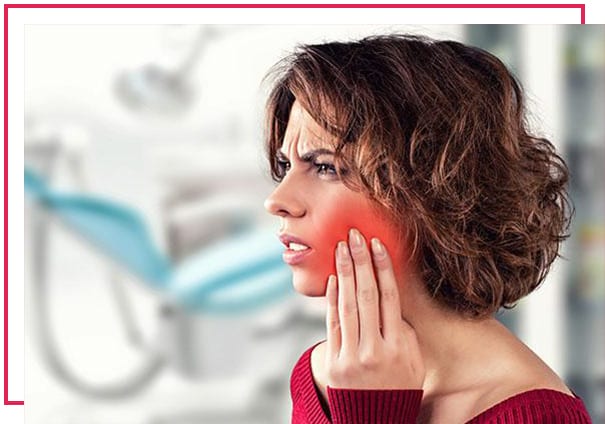
What are jaw joint disorders (temporomandibular joint disorders/TMJ)?
These are disorders in joint function resulting from pathologies within or outside the joint. Disorders affecting the jaw joint affect the system consisting of teeth, cheeks, lips, salivary glands, head and neck muscles, and ligaments. TMJ disorders, which are more commonly seen in the young and middle-aged population, especially in women, manifest themselves through symptoms such as clicking sounds coming from the jawbone, headaches, earaches, jaw pain, tinnitus, chewing difficulties, and difficulty opening the mouth. Problems in the jaw joint are a disease group that requires collaborative work among physicians from different specialties. Surgical treatment of jaw joint disorders is performed by Oral and Maxillofacial Surgery specialists.
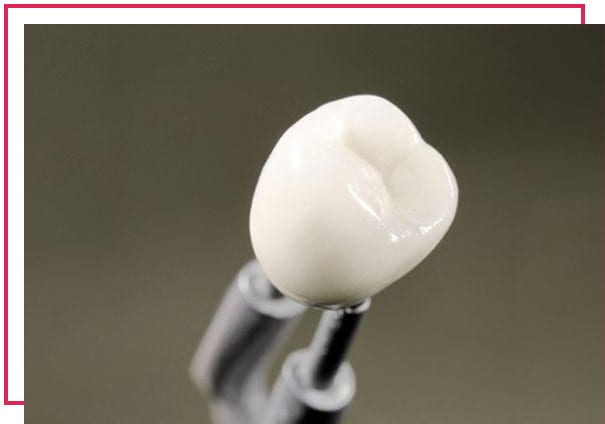
What is zirconium?
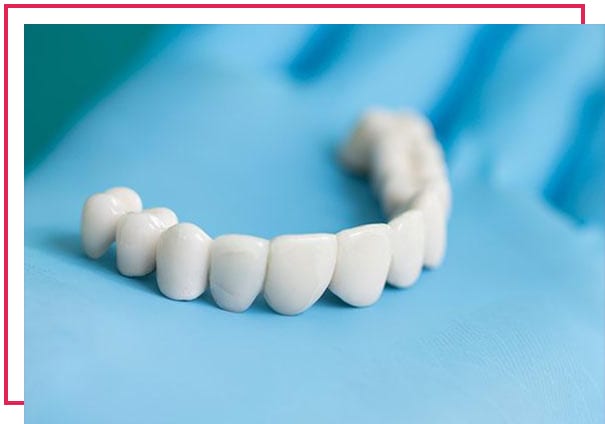
This is a treatment method commonly known as zirconium dental veneers. If your teeth are chipped, broken, or unresponsive to whitening treatments, zirconium veneers are the most suitable method to achieve aesthetic satisfaction. Dental veneers can also be applied using different metal types, but zirconia is preferred because of its light-transmitting properties, which produce more natural and aesthetic results.
What are the advantages of zirconium??
- Zirconium has light-transmitting properties. It is applied to patients who want a natural tooth appearance.
- It is the most suitable type of coating for patients with metal allergies.
- The zirconia material does not pose any harm to the body. It is a biocompatible material.
- It can be applied on implants; titanium and zirconia do not exhibit any negative interaction.
- The treatment duration is not very long and can be completed within 4-5 days.
- Zirconium is a method that can be applied to every patient whose permanent teeth have fully erupted.

What is the Cad/Cam technique?
CAD/CAM stands for computer-aided design and computer-aided manufacturing. It is a technology related to the use of computers in the design and production of prostheses. With CAD/CAM technology, it is possible to achieve flawless restorations in a single session without the need to visit the dentist multiple times.
What is the all on four treatment?
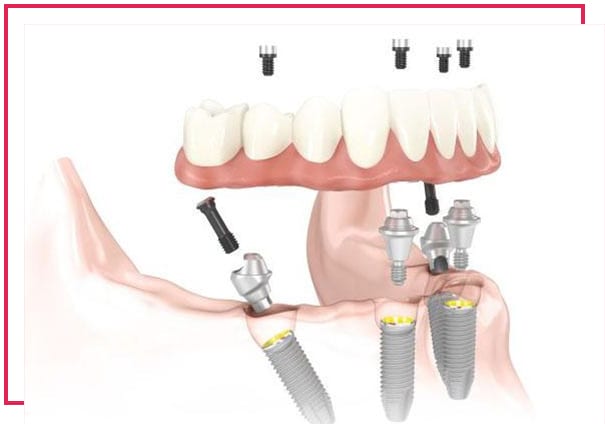
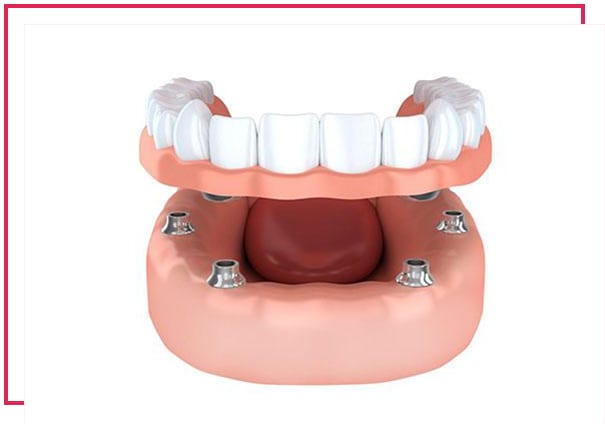
The All On Four implant technique is a method that enables the same-day fixation of a dental prosthesis on four dental implants placed at specific angles, used for individuals who cannot use dentures due to severe bone loss. Thanks to the All on four dental implant technique, patients who are completely edentulous can regain their teeth by having only four implants placed in each jaw. All on four dental treatment is a fast, reliable, and natural-looking method for patients who want implants but do not have the necessary bone structure.
Who is applied on all four treatment?
- To individuals whose jawbone height and width are suitable,
- To individuals who have lost their teeth due to various reasons,
- To individuals in good general health,
- It can be applied to individuals who do not have any major systemic diseases not under control,
- to those who have not received radiotherapy or recent chemotherapy,
- to edentulous patients with adequate bone structure.
